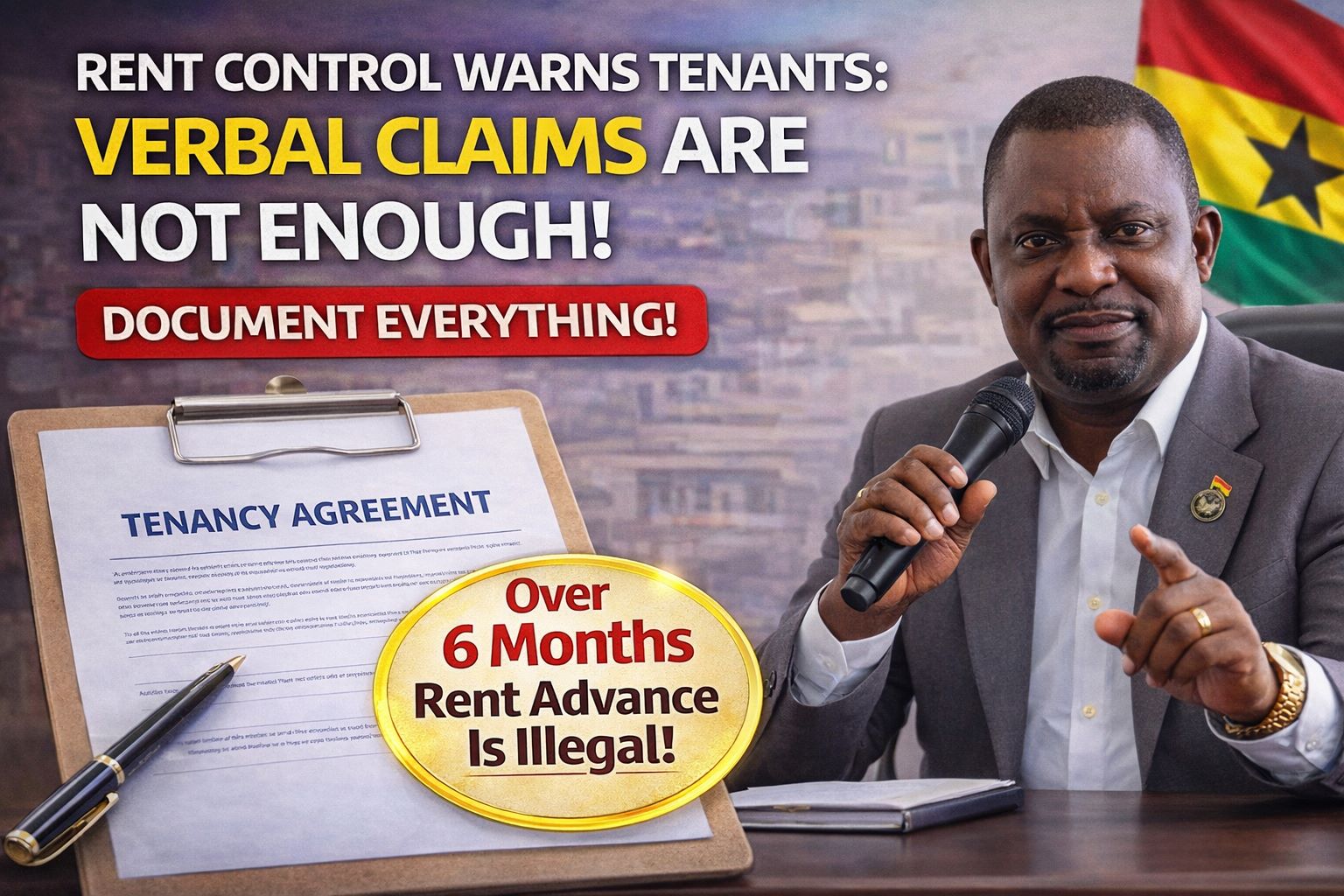
Ghana’s rental market is undergoing increased scrutiny as authorities push to enforce long-standing housing laws. A key message coming from the Rent Control Department, reinforced by Public Relations Officer Emmanuel Xove Kporsu, is clear: tenants must not rely on verbal claims when it comes to rent demands—everything must be properly documented.
This reminder is especially important at a time when many landlords continue to demand excessive rent advance, often beyond what the law allows.
The Law on Rent Advance in Ghana
Under Ghana’s rental laws, particularly the Rent Act, 1963 (Act 220), landlords are not allowed to demand more than six months’ rent advance for long-term residential accommodation.
For shorter tenancy agreements, the permitted advance is even lower—typically not more than two months.
Despite these clear legal limits, the reality in Ghana is very different. Many tenants are still asked to pay one to two years’ rent upfront, which is a direct violation of the law.
Why Documentation Matters
According to the Rent Control Department, tenants must understand that verbal agreements or claims are not legally sufficient when it comes to rent demands.
Written Tenancy Agreement Is Key
If a landlord demands any rent advance—especially beyond six months—it must be clearly stated in a written tenancy agreement.
Without proper documentation:
- Tenants have no legal proof of what was agreed
- Disputes become difficult to resolve
- Landlords may deny or change terms
- Rent Control may not be able to enforce claims effectively
This is why officials like Emmanuel Xove Kporsu emphasize that documentation protects both tenants and landlords.
What Happens If It’s Not Documented?
If a landlord demands excessive rent but it is not documented in a tenancy agreement, it becomes harder for tenants to challenge the demand.
However, even if it is documented, tenants should note that:
Any demand beyond six months’ rent advance is still illegal, regardless of what is written.
This means:
- A written agreement does not override the law
- Illegal terms can still be challenged at the Rent Control Department
The Role of the Rent Control Department
The Rent Control Department operates under the Ministry of Works and Housing and is responsible for enforcing rental laws and resolving disputes.
They provide:
- Mediation between landlords and tenants
- Legal guidance on tenancy agreements
- Enforcement of rent laws
- Dispute resolution through rent tribunals
Importantly, the department may request documentary evidence when handling disputes, making proper documentation essential.
Why This Reminder Is Important Now
This warning comes at a time when Ghana is seeing:
- Increased complaints about rent exploitation
- Government pressure to enforce the six-month rule
- New policies like the Rent Card system
- Public calls (including from national leaders) to report illegal rent practices
The goal is to bring more transparency, fairness, and accountability into the housing sector.
Common Mistakes Tenants Make
Many tenants unknowingly weaken their position by:
1. Accepting Verbal Agreements
Relying on spoken promises without written proof
2. Paying Without Documentation
Failing to collect receipts or signed agreements
3. Ignoring Legal Limits
Assuming high rent advance is “normal” even when it is illegal
4. Not Reporting Violations
Avoiding Rent Control due to lack of awareness or fear
How Tenants Can Protect Themselves
To stay safe in Ghana’s rental market, tenants should:
Always Demand a Written Agreement
Ensure all terms, including rent amount and duration, are documented.
Keep Payment Records
Collect receipts or proof of payment for every transaction.
Report Violations
Contact the Rent Control Department if a landlord breaks the law.
How This Affects Landlords
This directive is not only for tenants—landlords must also comply.
Landlords are expected to:
- Issue proper tenancy agreements
- Follow legal rent advance limits
- Keep accurate rent records
- Avoid informal or undocumented arrangements
Failure to comply can lead to legal consequences.
The Future of Renting in Ghana
The message from the Rent Control Department is clear: the era of informal rental agreements is ending.
With increased enforcement, tenant awareness, and government involvement, Ghana’s rental market is moving toward:
- More transparency
- Better documentation
- Stronger tenant protection
- Fairer housing practices
Our Parting Word
The reminder by Emmanuel Xove Kporsu highlights a crucial issue in Ghana’s housing sector—documentation is your protection.
Tenants must stop relying on verbal agreements and insist on proper tenancy documentation, especially when it comes to rent advance.
Understanding your rights, keeping records, and using trusted platforms like autonaba.com can help you avoid exploitation and secure a safer rental experience.
As reforms continue, one thing is certain: a more structured and legally compliant rental system is emerging in Ghana.