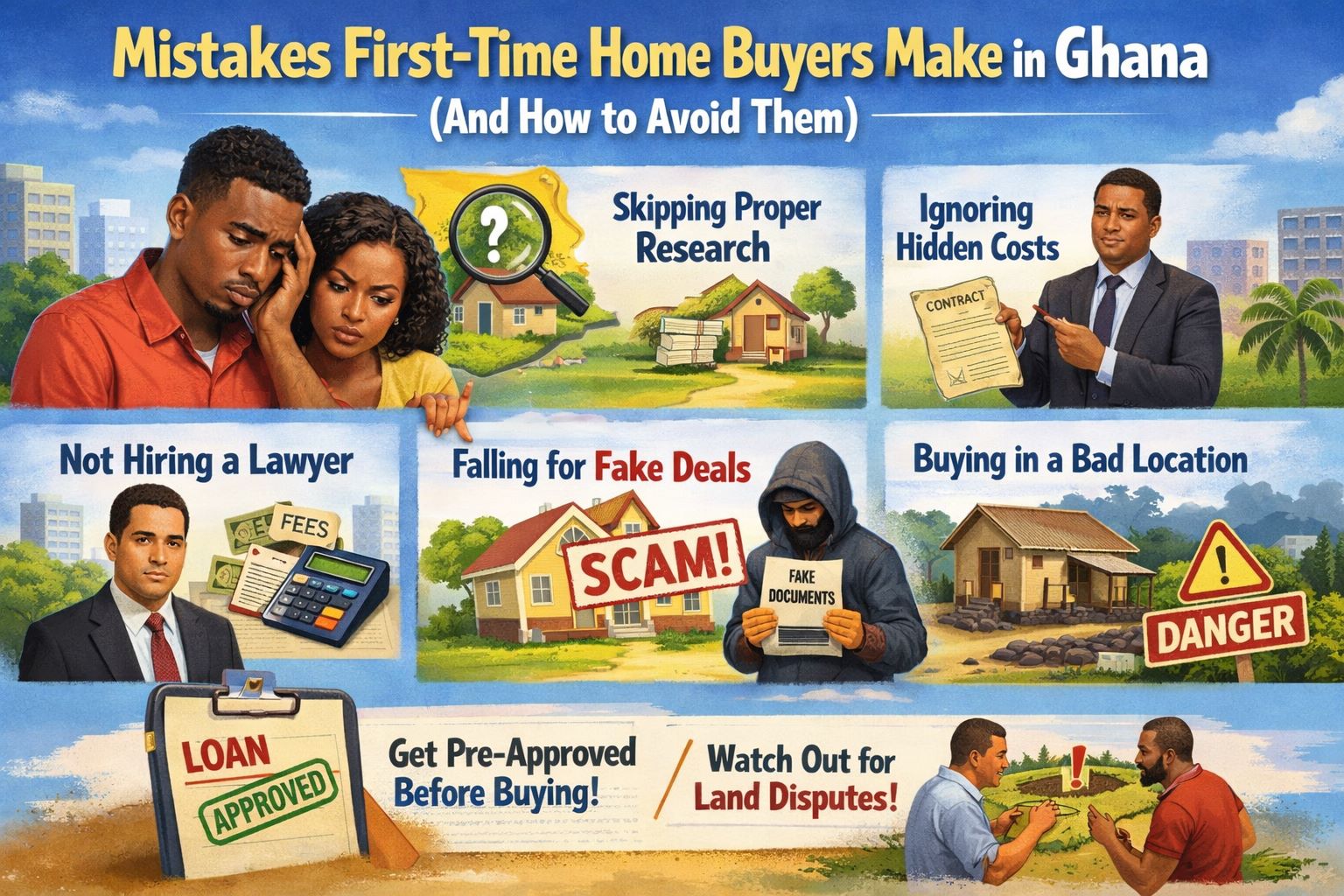
Buying your first home is one of the biggest financial decisions you will ever make. In Ghana’s fast-growing property market, excitement can sometimes lead to costly mistakes. Whether you’re buying in Accra, Kumasi, Tema, or emerging areas like Amasaman, understanding common pitfalls can save you money, stress, and legal trouble.
Here are the most common mistakes first-time home buyers make in Ghana — and how to avoid them.
1. Failing to Verify Land and Property Documents
One of the biggest mistakes buyers make is trusting sellers without properly verifying documentation.
In Ghana, land ownership issues are common due to:
- Multiple sales of the same land
- Disputed family lands
- Incomplete land registration
- Fake documentation
Before making any payment:
✔ Conduct a land search at the Lands Commission
✔ Verify the site plan and indenture
✔ Confirm the seller’s identity
✔ Use a qualified property lawyer
Skipping due diligence can result in court cases that last for years.
2. Not Understanding the True Cost of Buying
Many first-time buyers focus only on the listing price and forget additional expenses.
Beyond the property price, you must budget for:
- Legal fees
- Stamp duty
- Registration fees
- Agency commission
- Property valuation
- Renovation or finishing costs
- Utility connection fees
For example, buying a house in areas like Accra may come with higher documentation and registration costs compared to smaller towns.
Always add at least 10–15% extra to your budget for hidden costs.
3. Buying Without Proper Financial Planning
Some buyers rush into homeownership without stable income or a financial safety net.
Ask yourself:
- Do I have an emergency fund?
- Can I sustain mortgage payments (if applicable)?
- Will this purchase affect my business or investments?
In Ghana, mortgage options are still developing, and interest rates can be high. Ensure your monthly housing cost does not exceed 30–40% of your income.
Financial stability is key to long-term ownership success.
4. Ignoring Location and Future Development
Location determines property value appreciation.
Many first-time buyers focus only on affordability and ignore:
- Road access
- Drainage systems
- Flood-prone areas
- Nearby schools and hospitals
- Planned infrastructure
Some areas may seem cheap today but lack future growth potential.
Research emerging communities carefully. Government road expansion, commercial developments, and population growth significantly affect property value.
5. Skipping Property Inspection
Some buyers purchase off-plan or completed homes without thorough inspection.
Common issues found after purchase include:
- Poor drainage
- Cracked walls
- Low-quality roofing
- Electrical faults
- Plumbing defects
Always inspect the property physically or hire a professional to assess construction quality. What looks beautiful during viewing may hide structural problems.
6. Overlooking Land Title Type
Not all lands in Ghana are the same.
Common types include:
- Leasehold
- Freehold (rare in many urban areas)
- Stool land
- Family land
- Government land
Understanding the difference is critical. Leaseholds often come with expiration periods (usually 50 or 99 years). Know what you are buying and the renewal conditions.
7. Relying Solely on Word-of-Mouth Agents
The real estate industry in Ghana is growing rapidly, but not all agents are professional or registered.
Many first-time buyers trust:
- Unverified middlemen
- Informal agents
- Friends of friends
This can lead to inflated prices, misinformation, or fraud.
Use reputable platforms like Autonaba that prioritize verified listings and structured property information. Technology-driven platforms reduce the risk of scams and improve transparency.
8. Emotional Buying Instead of Strategic Buying
It’s easy to fall in love with a beautiful house.
However, emotional decisions can lead to:
- Overpaying
- Ignoring defects
- Choosing poor locations
- Buying beyond budget
Instead, evaluate:
✔ Market price comparisons
✔ Rental yield potential
✔ Resale value
✔ Infrastructure development plans
Treat your home as both a lifestyle decision and an investment.
9. Not Negotiating the Price
Many first-time buyers assume the asking price is final.
In Ghana’s property market, negotiation is common practice. Sellers often price properties slightly higher to allow room for bargaining.
Always:
- Research comparable properties
- Present reasonable offers
- Negotiate payment terms
Even a 5–10% reduction can save thousands of cedis.
10. Failing to Think Long-Term
Your first home should serve your future, not just your present.
Consider:
- Family expansion
- Work location changes
- Rental potential
- Infrastructure growth
Final Thoughts
Buying your first home in Ghana is exciting — but it requires careful planning, due diligence, and smart decision-making.
Avoiding these common mistakes can:
- Protect your finances
- Prevent legal issues
- Increase your property’s long-term value
- Give you peace of mind
The Ghanaian real estate market continues to evolve, with digital platforms, AI tools, and better data transparency improving the process for buyers.
If you are a first-time buyer, take your time. Research thoroughly. Consult professionals and lawyers. Use verified platforms. And most importantly — buy smart.