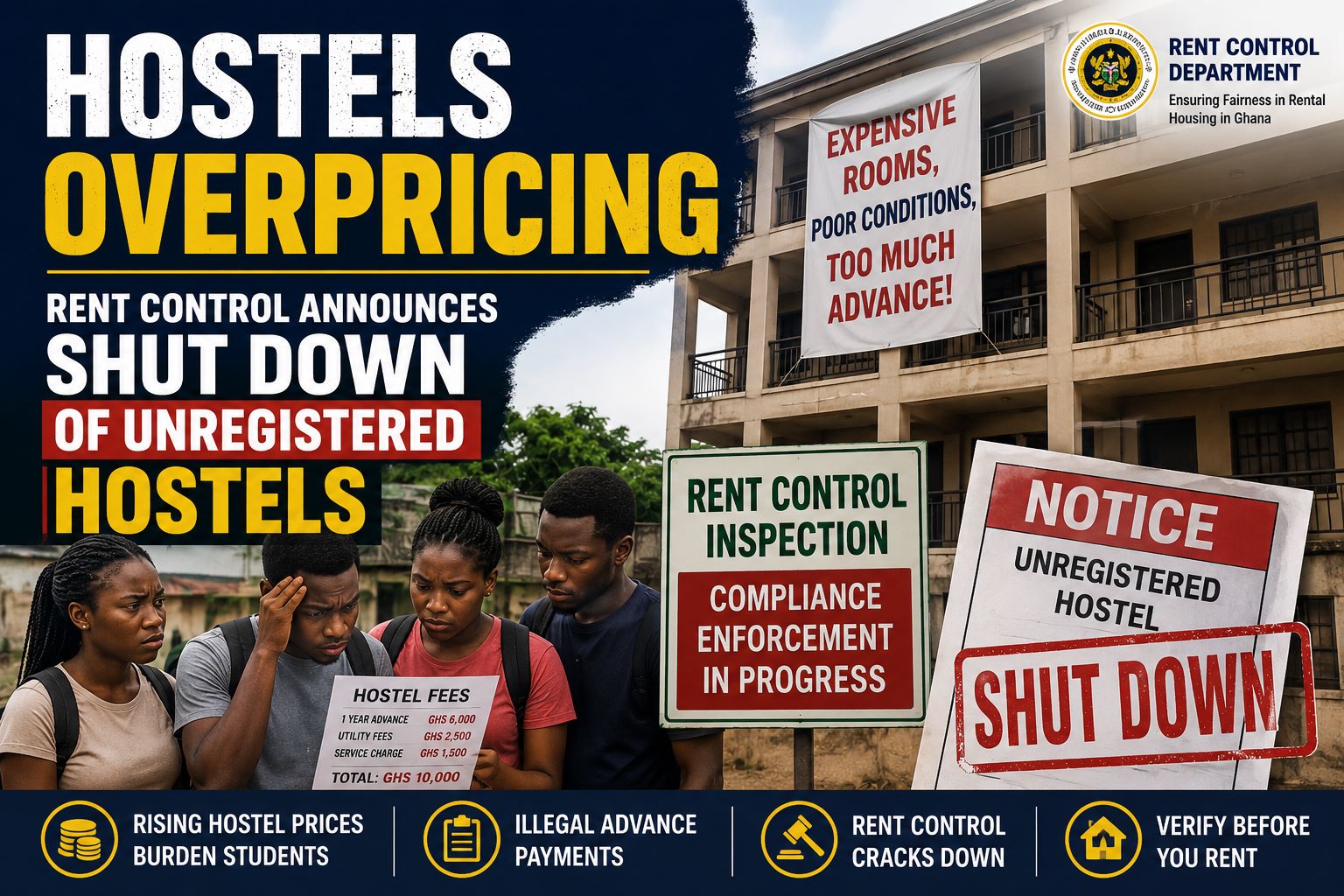
The growing cost of student accommodation in Ghana has become a major concern for students and parents across the country. In recent months, complaints about excessive hostel fees, illegal rent advances, and poor living conditions have intensified, especially around tertiary institutions.
In response, the Rent Control Department has announced a nationwide crackdown on hostel operators accused of exploitative pricing and non-compliance with rent regulations. The move follows a formal petition submitted by the National Union of Ghana Students (NUGS), which described the situation as “systemic” and harmful to students.
Rising Hostel Prices Becoming a National Concern
Over the years, private hostels around universities and colleges in Ghana have seen sharp increases in accommodation fees. Students in some tertiary communities reportedly pay thousands of Ghana cedis for shared rooms, often under poor conditions.
According to NUGS, some hostel operators are:
- Increasing rent arbitrarily
- Demanding illegal advance payments
- Ignoring tenancy procedures
- Operating without proper registration
The union warned that these practices are putting severe financial pressure on students and their families, with some students even considering deferring their education because of accommodation costs.
Rent Control Begins Nationwide Inspection Exercise
The Rent Control Department has now launched a nationwide compliance and inspection exercise targeting hostels in major university communities.
According to reports, inspections began in selected institutions in Accra, including:
- University of Ghana
- UPSA
- Wisconsin International University College
The Department says the exercise aims to verify allegations of:
- Hostel overpricing
- Excessive advance rent demands
- Violations of the Rent Act, 1963 (Act 220)
Authorities have warned that hostel operators who fail to comply with tenancy regulations could face sanctions, prosecution, or possible closure if they operate illegally or remain unregistered.
Unregistered Hostels Under Scrutiny
One major issue identified by regulators is the lack of proper registration and documentation among many private hostels.
The Rent Control Department has indicated that some operators function outside legal oversight, making it difficult to regulate pricing, enforce tenancy laws, and protect students from exploitation.
This has led to calls for:
- Registration of hostel facilities
- Standardized tenancy agreements
- Clear hostel pricing guidelines
- Better monitoring systems
The Department is also planning stakeholder consultations involving universities, student leaders, hostel operators, and housing experts to develop fairer accommodation policies.
Illegal Rent Advances Still a Major Problem
Under Ghana’s rent laws, landlords are restricted in the amount of advance rent they can legally collect. However, many students continue to report demands for one to three years of advance payments before securing hostel accommodation.
Online discussions among Ghanaians also reflect frustration over weak enforcement of rent regulations. Some users argue that although rent advance limits already exist under the law, enforcement has historically been ineffective.
The Rent Control Department has therefore warned hostel operators that violations of advance rent regulations will no longer be tolerated.
New Reforms in Ghana’s Rental Sector
The hostel crackdown is part of broader reforms currently being introduced by the Rent Control Department.
Some recent reforms include:
- Mandatory rent cards for tenants
- Registration of tenancy agreements
- Standardized tenancy documentation
- Increased inspections nationwide
Landlords who fail to comply with these directives risk sanctions and denial of services from Rent Control offices.
Officials say the reforms are intended to improve transparency, fairness, and accountability within Ghana’s rental housing system.
The Bigger Problem: Housing Demand vs Supply
Experts believe hostel overpricing is also linked to a larger housing shortage problem.
Around many universities in Ghana, student demand for accommodation far exceeds available hostel spaces. This imbalance gives some operators the opportunity to inflate prices with little resistance.
NUGS has therefore called for:
- More private investment in student housing
- Incentives for developers
- Stronger enforcement of rent laws
- Better protection for tenants
Our Parting Words
The recent action by the Rent Control Department signals a growing effort to restore fairness in Ghana’s student accommodation sector.
For many students and parents, the crackdown offers hope that exploitative pricing and illegal hostel practices will finally be addressed. However, long-term solutions will require stronger enforcement, increased housing supply, and better regulation of private hostel operators.
As the inspections continue nationwide, hostel owners are being urged to regularize their operations and comply fully with Ghana’s tenancy laws to avoid sanctions or possible shutdowns.