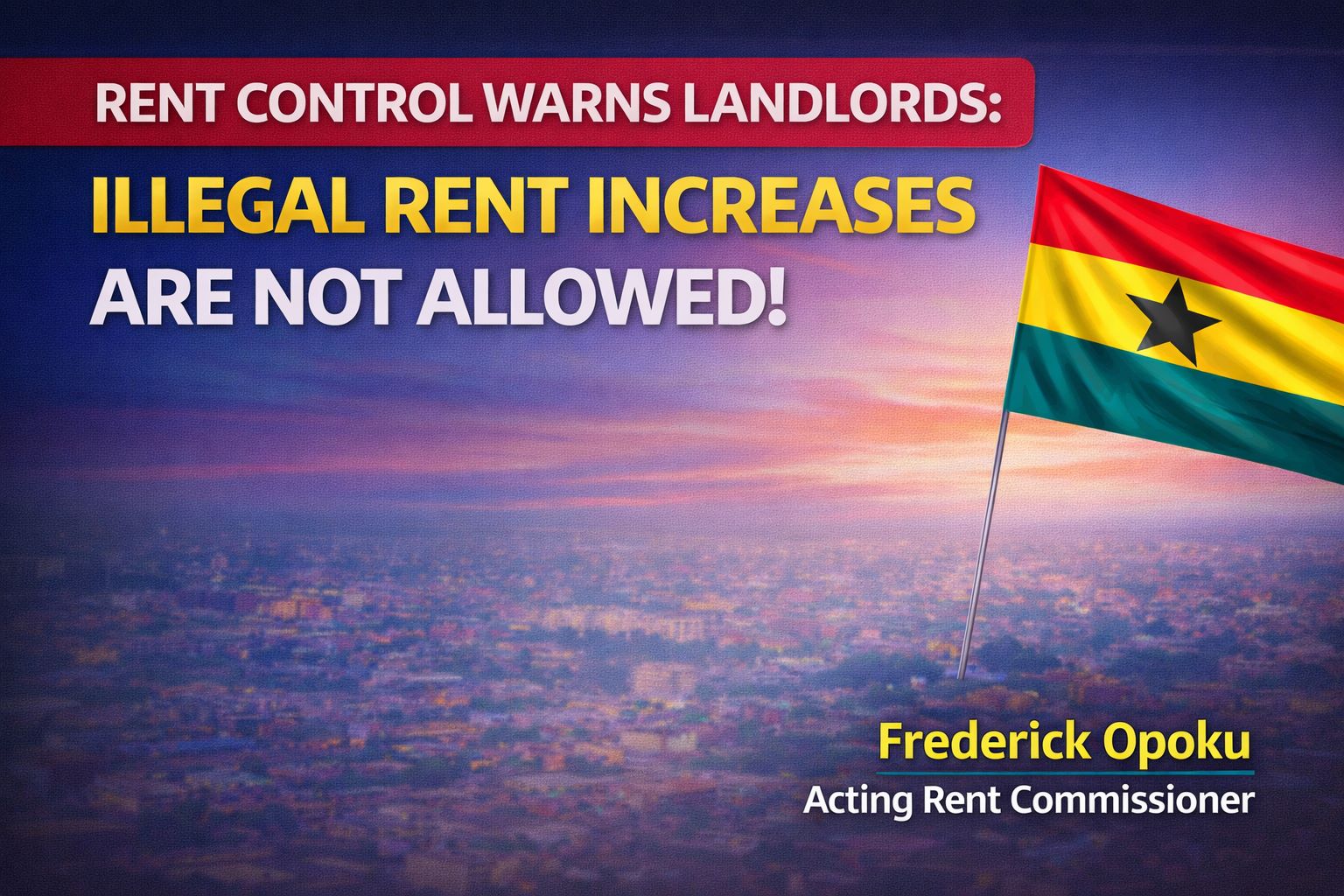
Ghana’s rental market is facing increased regulation as authorities work to protect tenants from unfair practices. A recent reminder from Frederick Opoku, Acting Rent Commissioner, has brought renewed attention to an important rule: landlords cannot increase rent without prior assessment and certification from the Rent Control Department.
This directive is a major step toward ensuring fairness and transparency in Ghana’s housing sector. In this article, we explain what this means, how it affects tenants and landlords, and what you should do if faced with an unlawful rent increase.
What the Law Says About Rent Increases
Under Ghana’s rent regulations, landlords are not allowed to increase rent arbitrarily. Before any rent increment takes effect, it must be:
- Assessed by the Rent Control Department
- Approved and certified officially
This process ensures that rent adjustments are fair and reflect current market conditions, rather than being based on personal decisions by landlords.
The directive reinforces existing housing laws that aim to protect tenants from sudden and excessive rent hikes.
Why This Reminder Is Important
Many tenants in Ghana have experienced unexpected rent increases, often without any formal notice or justification. In some cases, landlords increase rent significantly after the initial agreement period, placing financial strain on tenants.
The statement by Frederick Opoku serves as a warning that such practices are illegal unless proper procedures are followed.
This reminder comes at a time when:
- The cost of living is rising
- Housing demand remains high
- Tenants are already struggling with rent advance payments
By enforcing this rule, the Rent Control Department aims to bring stability to the rental market.
How the Rent Assessment Process Works
Before increasing rent, a landlord must submit a request to the Rent Control Department. The department then evaluates several factors, including:
- Location of the property
- Condition and facilities available
- Current market rental rates
- Duration of tenancy
After this assessment, the department may approve, adjust, or reject the proposed increase.
Only after receiving official certification can the landlord legally implement the new rent.
What This Means for Tenants
For tenants, this directive provides important protection.
Protection Against Sudden Increases
Landlords cannot wake up and increase rent without following due process. This protects tenants from unexpected financial pressure.
Right to Challenge Rent Hikes
If a landlord increases rent without approval, tenants have the right to:
- Report the issue to the Rent Control Department
- Refuse to accept the illegal increase
- Seek legal redress
More Transparency
The involvement of the Rent Control Department ensures that rent adjustments are transparent and justified.
What This Means for Landlords
Landlords must now be more careful and follow proper procedures when adjusting rent.
Compliance Is Mandatory
Failure to obtain approval before increasing rent can lead to:
- Legal penalties
- Disputes with tenants
- Loss of credibility
Professional Property Management
Landlords are encouraged to adopt more structured and professional approaches to managing their properties.
Long-Term Benefits
Following legal procedures can build trust with tenants and reduce conflicts.
Common Illegal Practices to Watch Out For
Tenants should be aware of common illegal rent practices, including:
- Increasing rent without notice
- Demanding higher rent without approval
- Changing terms outside the tenancy agreement
- Using threats to force tenants to accept new rent
If you encounter any of these, it is important to report them.
The Role of the Rent Control Department
The Rent Control Department plays a key role in regulating rental practices in Ghana.
Its responsibilities include:
- Assessing and approving rent increases
- Resolving disputes between landlords and tenants
- Enforcing housing laws
- Educating the public on rental rights
Tenants are encouraged to contact the department whenever they face unfair treatment.
The Future of Rent Regulation in Ghana
The directive from Frederick Opoku is part of a broader effort to reform Ghana’s housing sector.
With increased awareness and enforcement, the rental market is expected to become:
- More transparent
- Better regulated
- Fairer for tenants and landlords
Combined with other initiatives like the Rent Card policy and calls for monthly rent systems, Ghana is moving toward a more structured housing system.
Our Parting Word
The reminder that rent increases require approval from the Rent Control Department is a crucial step in protecting tenants and ensuring fairness in Ghana’s rental market.
Tenants must stay informed about their rights, while landlords must comply with the law to avoid penalties.
If you are renting or planning to rent a property, always ensure that any rent increase follows the proper legal process.
👉 To find verified properties, visit autonaba.com, where you can explore trusted listings across Ghana.
As Ghana’s real estate sector continues to evolve, understanding these regulations will help you make smarter and safer housing decisions.