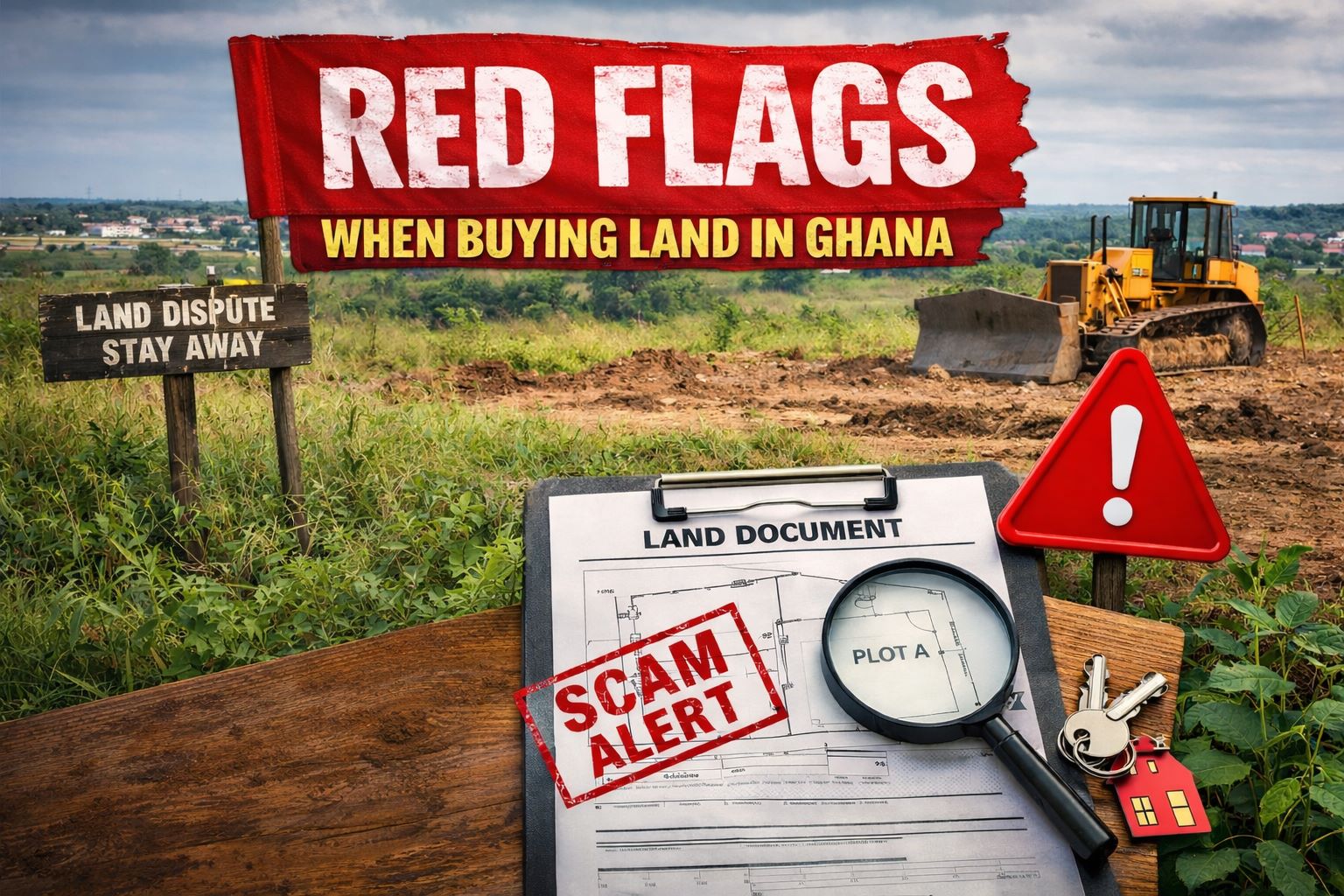
Buying land is one of the most popular investment decisions in Ghana. Many people purchase land to build homes, start businesses, or hold it as a long-term investment. However, land ownership in Ghana can sometimes be complicated due to documentation issues, multiple ownership claims, and fraudulent sellers.
Understanding the red flags when buying land in Ghana can help you avoid costly mistakes and protect your investment. In this article, we will explore the most common warning signs every buyer should watch for before purchasing land.
1. The Seller Cannot Provide Proper Documentation
One of the biggest red flags when buying land in Ghana is when a seller cannot provide proper land documents.
Important documents you should always request include:
- Indenture (land ownership agreement)
- Site plan
- Allocation note (for stool or family lands)
- Land title certificate or land registration documents
If the seller delays, makes excuses, or says the documents will be “prepared later,” you should proceed with caution. Legitimate landowners should have documentation readily available.
2. The Land Is Already in Dispute
Land disputes are very common in many parts of Ghana. If the land you are buying is under litigation or family conflict, you could lose both the property and your money.
Warning signs include:
- Multiple people claiming ownership
- Neighbors warning you about disputes
- Court markings or notice boards on the land
- Local residents saying the land is “case land”
Always conduct a proper land search at the Lands Commission to confirm that the land is free from legal disputes.
3. The Price Is Too Good to Be True
Another major red flag when buying land in Ghana is when the price is unusually cheap compared to other lands in the same area.
For example, if land in an area normally sells for ₵120,000 but someone offers it for ₵40,000, you should investigate further.
Extremely low prices may indicate:
- Fraudulent ownership
- Litigation on the land
- Government acquisition land
- Environmental restrictions
Cheap land can sometimes become very expensive if you later discover legal problems.
4. The Land Is Government Acquired
Some lands in Ghana are acquired by the government for future projects such as roads, schools, or public infrastructure.
Buying government-acquired land is risky because the government can reclaim it without compensation.
You should verify land status with the Lands Commission to confirm whether the land is:
- State land
- Government acquired land
- Freehold or leasehold land
This simple step can save you from losing your investment.
5. No Site Plan or Incorrect Location Details
A site plan is essential when purchasing land because it clearly shows the exact location and boundaries of the property.
A major red flag when buying land in Ghana is when:
- The seller cannot provide a site plan
- The coordinates on the site plan are inaccurate
- The site plan does not match the physical land
Without a proper site plan, you could end up buying the wrong land or land that overlaps with another property.
6. Pressure to Pay Immediately
Fraudsters often pressure buyers to pay quickly without giving them time to conduct proper checks.
They may say things like:
- “Another buyer is coming tomorrow.”
- “You must pay today to secure the land.”
- “This is the last plot available.”
This pressure tactic is a common red flag when buying land in Ghana. A genuine land transaction should allow you time to verify documents and conduct due diligence.
7. The Land Has No Access Road
Access is a crucial factor when buying land. If there is no proper road leading to the land, you may face serious challenges when you start building.
Some sellers show buyers a temporary pathway that later gets blocked by neighboring landowners.
Before purchasing land, make sure:
- There is a legal access road
- The road is included in the site plan
- The land is not landlocked
Lack of road access can significantly reduce the value of the property.
8. Survey Pillars Are Missing
Survey pillars mark the boundaries of the land. If the pillars are missing or tampered with, it becomes difficult to identify the exact size and boundaries of the property.
Missing pillars are another important red flag when buying land in Ghana.
You should always visit the land with a licensed surveyor to confirm that the pillars are correctly positioned and correspond with the site plan.
9. The Seller Is Not the True Owner
In some cases, agents or middlemen attempt to sell land they do not legally own.
Signs of this include:
- The seller refuses to bring the real owner
- The name on the documents does not match the seller
- The seller avoids signing official agreements
Always ensure that the person selling the land is either the legitimate owner or an authorized representative.
10. No Written Agreement
Another serious red flag when buying land in Ghana is when the seller insists on verbal agreements instead of written contracts.
Every land transaction should include:
- A written agreement
- Signed indenture
- Witness signatures
- Lawyer verification
Without proper documentation, it will be very difficult to defend your ownership in court if disputes arise.
Our Parting Words
Buying land can be a life-changing investment, but it also comes with risks if proper checks are not done. Understanding the red flags when buying land in Ghana will help you make smarter decisions and avoid common property scams.
Before making any payment, always:
- Conduct a land search
- Verify documents
- Visit the land physically
- Consult a lawyer or property expert
Platforms like Autonaba are also helping bring more transparency to real estate transactions by making property listings easier to verify and access.
If you stay alert and follow due diligence procedures, you can confidently invest in land and secure your future in Ghana’s growing real estate market.
Disclaimer
Real estate laws and land ownership procedures in Ghana can change and may vary depending on the location and circumstances of each property. This article is provided for informational purposes only and should not be considered legal or financial advice. Readers are strongly encouraged to consult qualified legal professionals and verify property records with the Lands Commission before purchasing any land. Autonaba is not responsible for decisions made based on the information in this article.