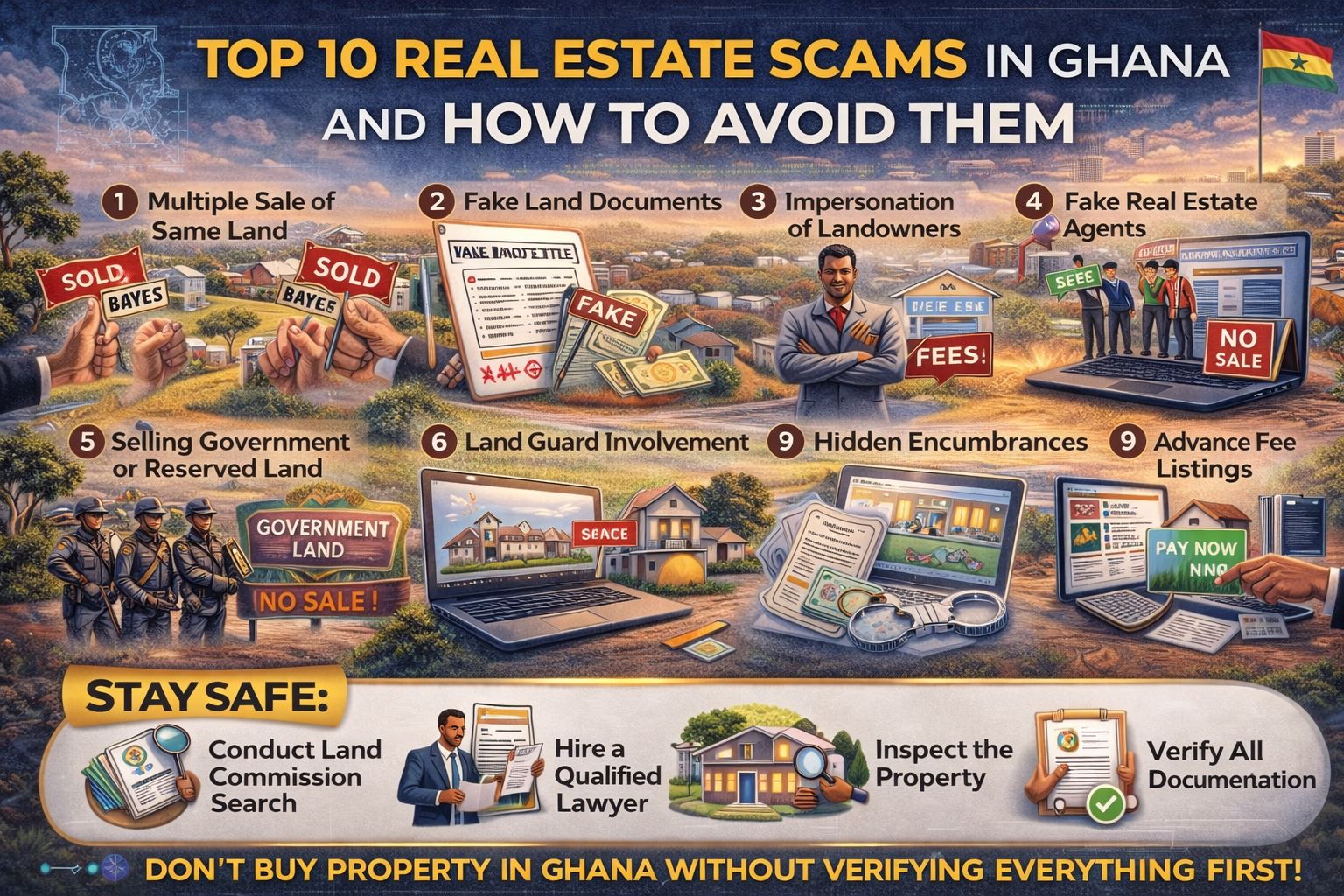
The Ghanaian property market continues to grow rapidly, attracting investors, homebuyers, and diaspora buyers who want to secure land or property. However, alongside this growth comes a major risk: real estate scams in Ghana.
Every year, many people lose thousands of Ghana cedis because they fail to properly verify land ownership, documentation, or the credibility of sellers. Understanding the top real estate scams in Ghana is one of the most important steps you can take to protect your investment.
In this guide, we explore the Top 10 real estate scams in Ghana and how to avoid them.
1. Multiple Sale of the Same Land
One of the most common real estate scams in Ghana is when the same piece of land is sold to multiple buyers.
Fraudsters exploit weak documentation systems or take advantage of buyers who fail to conduct proper land searches. In many cases, different buyers receive separate indentures for the same plot.
How to Avoid It
Before making any payment:
- Conduct a land search with the Lands Commission
- Verify the ownership records
- Confirm there are no disputes or existing claims
A proper search can save you from expensive legal battles.
2. Fake Land Documents
Another common property scam in Ghana involves forged documents such as:
- Fake indentures
- Forged site plans
- Altered survey documents
Some scammers produce documents that look official but are not legally registered.
How to Avoid It
Always hire a qualified lawyer to review the documents. Your lawyer should verify:
- Land title certificate
- Survey plan authenticity
- Registration status
Never rely solely on documents given by the seller.
3. Impersonation of Landowners
Some scammers pose as the legitimate landowners and sell property they do not actually own.
They may claim to represent family land or act as “caretakers” with supposed authority to sell.
How to Avoid It
- Confirm ownership through the Lands Commission
- Request identification documents
- Verify that the seller has legal authority to sell the property
If the seller cannot provide clear documentation, walk away.
4. Fake Real Estate Agents
Unlicensed individuals often present themselves as professional agents.
They may collect agency fees, viewing fees, or deposit payments before disappearing.
How to Avoid It
Work only with trusted property platforms and licensed real estate agents.
Avoid sending payments to agents through personal mobile money accounts without written agreements.
5. Selling Government or Reserved Land
Another dangerous real estate scam in Ghana involves land that belongs to the government or is reserved for public projects.
Unsuspecting buyers purchase these lands only to later discover they cannot legally develop them.
How to Avoid It
Conduct proper land verification and confirm zoning status before buying.
This ensures the land is not:
- Government land
- Road reservation
- Utility corridor
- Protected area
6. Land Guard Involvement
Land guards are sometimes involved in disputes where multiple groups claim ownership of the same land.
Buyers who unknowingly purchase disputed land may face harassment or threats during construction.
How to Avoid It
Only buy land from verified owners or reputable developments.
Avoid properties with ongoing disputes or unclear ownership history.
7. Fake Estate Developments
Some scammers advertise fake housing projects or estates that do not exist.
They collect deposits from buyers for houses that are never built.
How to Avoid It
Before investing:
- Visit the site physically
- Confirm building permits
- Research the developer’s previous projects
Never rely solely on online advertisements.
8. Hidden Encumbrances on Property
Some properties have existing legal issues such as:
- Court cases
- Family disputes
- Mortgages
- Outstanding debts
These encumbrances may not be disclosed by the seller.
How to Avoid It
A professional land search can reveal whether the property has any legal restrictions.
This step is essential when trying to avoid real estate fraud in Ghana.
9. Advance Fee Property Listings
Online scams have increased in recent years. Fraudsters advertise attractive properties online and request advance payments for:
- Viewing
- Reservation
- Documentation
Once payment is made, the scammer disappears.
How to Avoid It
Never send money before verifying:
- The property location
- The identity of the seller
- Ownership documentation
Always inspect the property physically.
10. Property Price Manipulation
Some dishonest agents intentionally inflate property prices to maximize commissions.
This is not always illegal, but it can cause buyers to significantly overpay.
How to Avoid It
Compare prices across multiple listings and verify market value before purchasing.
Researching the area can help determine whether the property price is reasonable.
Why Technology Is Helping Reduce Real Estate Scams
Modern property platforms and digital verification tools are helping reduce real estate scams in Ghana.
Technology can help buyers:
- Verify property listings
- Detect duplicate listings
- Confirm ownership records
- Identify suspicious sellers
Digital platforms also provide transparency and traceable transaction records, making fraud more difficult.
Our Parting Words
Real estate remains one of the most valuable investments in Ghana. However, without proper verification, buyers can easily fall victim to real estate scams in Ghana.
To protect yourself:
Conduct proper land searches
Hire a qualified lawyer
Verify documents carefully
Inspect the property physically
Avoid making rushed payments
Knowledge is the best defense against fraud. By understanding the top real estate scams in Ghana and how to avoid them, you can make smarter investment decisions and secure your property safely.
Disclaimer
This article is for educational and informational purposes only. It does not constitute legal or financial advice. Property laws and regulations may change, and readers are encouraged to consult qualified legal professionals before purchasing property in Ghana.