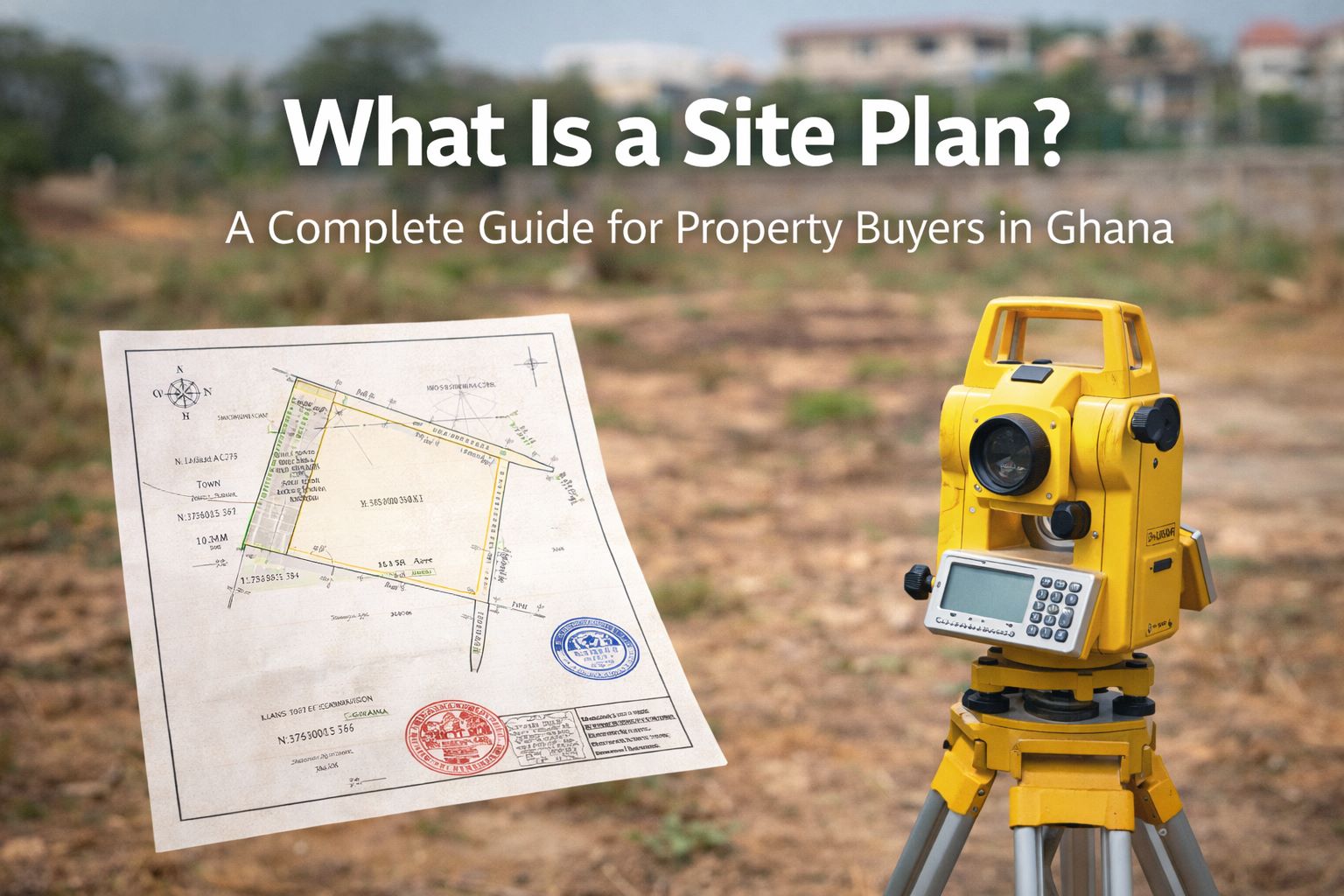
If you are buying land or building a house in Ghana, one document you cannot ignore is the site plan. But what is a site plan, and why is it so important?
A site plan is a detailed drawing that shows the exact location, size, boundaries, and measurements of a specific parcel of land. It provides a visual representation of the land in relation to surrounding plots, roads, landmarks, and neighboring properties. In Ghana’s real estate industry, a site plan is one of the key documents required when registering land with the Lands Commission Ghana.
Whether you are a first-time buyer or an experienced investor, understanding a site plan can protect you from costly mistakes and land disputes.
What Exactly Is on a Site Plan?
A standard site plan in Ghana typically includes:
- Plot number
- Boundary lines
- Dimensions and measurements
- Total land size (in square meters or acres)
- Surveyor’s name and signature
- Date of survey
- Nearby roads and landmarks
- Orientation (North direction)
Some site plans also include coordinates that can be verified using official mapping systems. This makes it easier for authorities and buyers to confirm the exact location of the land.
Think of a site plan as the “map identity” of your land.
Why Is a Site Plan Important?
1. It Confirms the Exact Location of the Land
One of the biggest risks in Ghana’s real estate market is buying land that overlaps with someone else’s property. A site plan helps confirm that the land being sold to you matches the physical land on the ground.
Before making payment, your surveyor can use the site plan to physically identify and confirm the plot boundaries.
2. It Is Required for Land Registration
If you want to process a land title or register your indenture, you will need a site plan. The Lands Commission Ghana requires it as part of the documentation process.
Without a proper site plan, your registration process may be delayed or rejected.
3. It Helps Prevent Land Litigation
Land disputes are common in Ghana. Many of these disputes happen because buyers fail to verify the site plan before purchasing.
A properly prepared and verified site plan helps:
- Confirm ownership boundaries
- Prevent encroachment issues
- Reduce the risk of court cases
4. It Is Needed for Building Approval
Before constructing a building, you must submit a building plan to your local assembly. Your architect will rely on the site plan to design the structure according to the correct land measurements.
If the dimensions are wrong, your building could violate planning regulations.
Who Prepares a Site Plan?
A licensed land surveyor prepares a site plan. The surveyor measures the land using professional equipment and creates an official drawing.
It is important to work with qualified professionals. A fake or poorly prepared site plan can cause serious legal problems later.
Site Plan vs Indenture: What’s the Difference?
Many people confuse a site plan with an indenture, but they are not the same.
- Site Plan: Shows the physical details and boundaries of the land.
- Indenture: A legal agreement that transfers ownership from seller to buyer.
The site plan usually forms part of the indenture documentation when registering land.
In simple terms:
The site plan shows where the land is.
The indenture proves who owns it.
How to Verify a Site Plan in Ghana
Before paying for land, take these steps:
1. Conduct a Search at the Lands Commission
Visit the Lands Commission Ghana to confirm that the plot number and coordinates match their records.
2. Hire an Independent Surveyor
Even if the seller provides a site plan, it is wise to hire your own surveyor to confirm that the land on paper matches the land on the ground.
3. Check for Overlaps
Ensure the plot does not overlap with:
- Government land
- Road reservations
- Water bodies
- Existing registered properties
This step can save you from losing your investment.
Common Mistakes Buyers Make
- Paying for land without verifying the site plan.
- Relying only on verbal directions like “the third plot after the mango tree.”
- Not confirming boundary pillars on the land.
- Using outdated or photocopied site plans.
Always request the original and ensure it is properly signed and dated.
How Much Does a Site Plan Cost in Ghana?
The cost of preparing a site plan varies depending on location and surveyor fees. In major cities like Accra, costs may be higher than in rural areas. However, the cost of a proper site plan is small compared to the risk of losing land due to improper documentation.
Consider it an investment in protection.
Can You Buy Land Without a Site Plan?
Technically, yes — but it is highly risky.
Buying land without a site plan is like buying a car without checking the engine number. You may end up with land that:
- Has boundary conflicts
- Cannot be registered
- Is already sold to someone else
A site plan provides clarity, protection, and legal support.
Our Parting Words
So, what is a site plan?
A site plan is a detailed survey drawing that shows the exact boundaries, size, and location of a piece of land. It is a critical document in Ghana’s real estate process and plays a major role in land registration, ownership verification, and building approval.
If you are buying land, never skip this step.
At autonaba.com, we encourage buyers to always verify site plans and conduct proper due diligence before making payments. Real estate is one of the biggest investments you will ever make — and proper documentation is your strongest protection.
Disclaimer
This article is for informational and educational purposes only and does not constitute legal advice. Land laws, registration procedures, and documentation requirements in Ghana may change and can vary depending on individual circumstances. Readers are advised to consult a qualified property lawyer and verify all documents with the Lands Commission Ghana before making any real estate decisions. Autonaba.com is not responsible for any loss or dispute arising from reliance on this information.