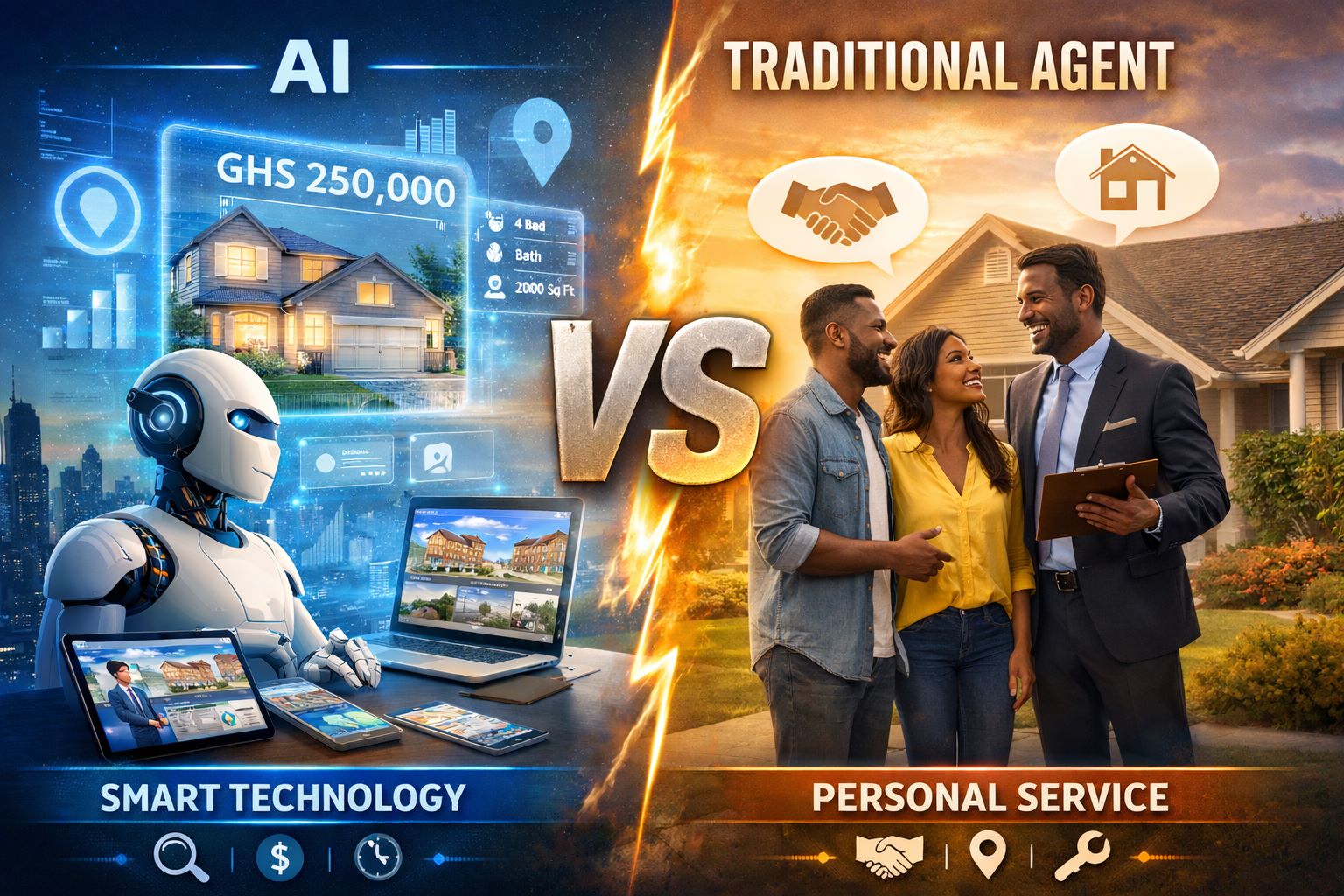
The real estate industry is changing fast. Technology is transforming how people search, compare, and buy properties. Platforms powered by Artificial Intelligence (AI) are now competing directly with traditional real estate agents.
So the big question is: AI vs Traditional Real Estate Agents — which is better?
If you’re buying, selling, or renting property on autonaba.com, this guide will help you understand the strengths and weaknesses of both options — and how the future of real estate might combine the best of both worlds.
The Rise of AI in Real Estate
Artificial Intelligence is no longer a futuristic concept. It’s already shaping the global property market. Major platforms like Zillow and Redfin use AI to estimate property values, recommend listings, and analyze market trends.
But what exactly does AI do in real estate?
1. Smart Property Recommendations
AI studies user behavior — searches, clicks, budget range, preferred locations — and suggests properties that match those preferences instantly.
2. Automated Valuation
AI algorithms analyze market data to estimate property prices quickly and accurately.
3. 24/7 Availability
Unlike humans, AI systems never sleep. Buyers can search, compare, and inquire anytime.
4. Faster Transactions
Digital processes reduce paperwork, speed up communication, and streamline negotiations.
For platforms like autonaba.com, AI can match buyers to properties in Accra, Kumasi, or Takoradi within seconds — something that traditionally required multiple phone calls and physical visits.
The Strength of Traditional Real Estate Agents
Despite technological growth, traditional agents remain powerful players in the market.
A human real estate agent offers:
1. Emotional Intelligence
Buying property is emotional. Fear, excitement, doubt — these feelings matter. Human agents understand tone, hesitation, and personal concerns.
2. Negotiation Skills
Experienced agents can negotiate better prices or favorable terms based on relationships and experience.
3. Local Market Knowledge
An agent who works daily in East Legon or Amasaman may know things that data alone cannot show — such as upcoming developments or neighborhood dynamics.
4. Physical Presence
Some buyers still prefer someone who physically shows properties and guides them step by step.
The personal trust built between client and agent is something AI still struggles to replicate.
Comparing AI and Traditional Agents
Let’s break it down clearly:
| Feature | AI Platforms | Traditional Agents |
|---|---|---|
| Speed | Instant search & matching | Slower, manual |
| Availability | 24/7 | Business hours |
| Cost | Lower operational cost | Commission-based |
| Emotion & Trust | Limited | Strong |
| Negotiation | Data-driven | Experience-driven |
| Market Analysis | Big data accuracy | Local insight |
From this comparison, it’s clear that AI excels in efficiency and scale, while traditional agents shine in personal relationships and negotiation.
Cost Consideration: Which Is More Affordable?
Traditional agents typically charge commission — often 3% to 10% depending on the market.
AI-powered platforms reduce overhead costs. Automated systems mean fewer staff, less manual processing, and lower marketing expenses.
For sellers listing on autonaba.com, this can mean:
- Lower listing fees
- Wider exposure
- Faster matching with serious buyers
In markets where affordability matters, AI platforms often have a strong advantage.
Accuracy: Who Gets the Price Right?
AI tools analyze thousands of data points — recent sales, neighborhood trends, property size, amenities, and more.
Companies like Opendoor use automated models to make property offers within minutes.
However, AI depends heavily on accurate data input. In emerging markets where data may be incomplete, human agents sometimes provide better price intuition.
In Ghana, for example, informal pricing practices can make pure data models challenging — but AI improves as more listings and transactions are recorded.
Trust and Transparency
One major issue in real estate is trust.
Buyers worry about:
- Fake listings
- Overpriced properties
- Hidden defects
AI platforms can improve transparency by:
- Verifying listings
- Using data-backed valuations
- Providing structured information
But human agents build trust through personal relationships and reputation.
The most powerful solution may not be “AI vs humans” — but AI + trusted professionals working together.
Speed of the Future
The modern buyer wants:
- Instant results
- Digital communication
- Online documentation
- Quick decision-making
AI wins clearly in speed.
Younger buyers especially prefer digital platforms over traditional office visits. They want to compare properties like they compare products on Amazon.
Real estate is moving toward digital-first experiences — and platforms that fail to adapt risk falling behind.
So, Which Is Better?
The answer depends on your needs.
Choose AI if you:
- Want fast property matching
- Prefer digital processes
- Are comfortable making data-driven decisions
- Want lower costs
Choose a Traditional Agent if you:
- Need strong negotiation support
- Prefer in-person guidance
- Value long-term personal relationships
- Are unfamiliar with the buying process
The Autonaba Approach: The Hybrid Future
At autonaba.com, the goal isn’t to eliminate agents — it’s to enhance the experience.
The future of real estate is hybrid:
- AI handles data, speed, fraud detection, property valuation, property search, and matching
- Humans handle trust, negotiation, and personal connection
This model delivers:
- Efficiency
- Transparency
- Affordability
- Personal support
Instead of asking “AI vs Traditional Real Estate Agents?”, the smarter question is:
How can technology and human expertise work together to create a better real estate experience?
Our Parting Words
Artificial Intelligence is transforming real estate globally. Traditional agents still provide irreplaceable value.
The winners in this new era will not be those who resist change — but those who adapt and integrate technology intelligently.
For buyers and sellers using autonaba.com, the future is clear:
Smarter search. Faster decisions. Better outcomes.
And that future is powered by both innovation and human insight.