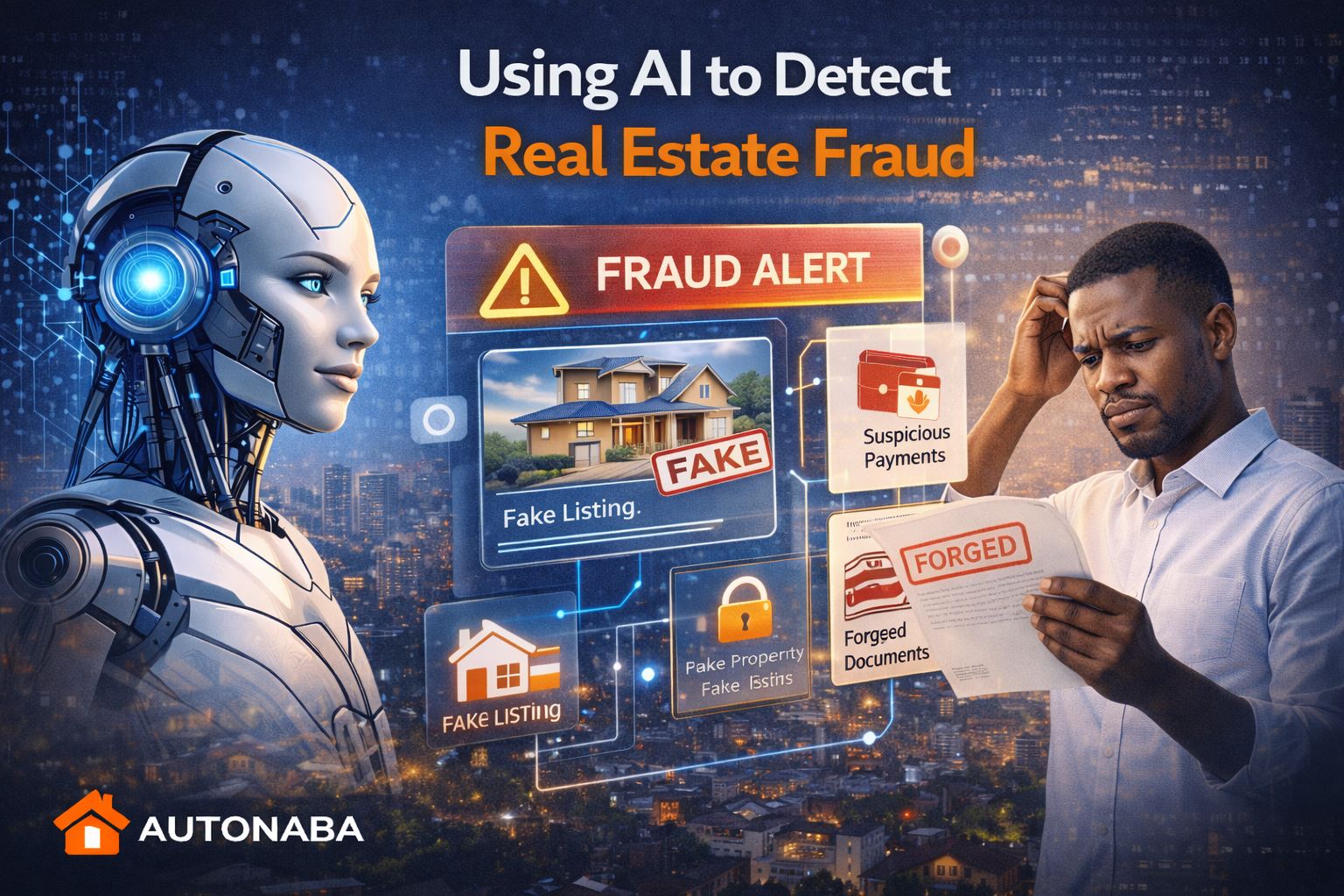
Real estate fraud is a growing concern in many property markets — and Ghana is no exception. As more transactions move online and digital property platforms become popular, fraudsters are finding new ways to deceive buyers, renters, and even agents.
From fake property listings to forged land documents, scams can cost victims thousands of cedis and years of legal stress.
But there’s good news.
Artificial Intelligence (AI) is emerging as one of the most powerful tools in the fight against real estate fraud. By analyzing data patterns, verifying identities, and detecting suspicious behavior, AI is helping platforms and buyers reduce risk significantly.
Here’s how AI is transforming fraud detection in real estate.
The Growing Problem of Real Estate Fraud
Real estate fraud can take many forms:
- Fake property listings
- Duplicate listings with different prices
- Stolen property images
- Forged land ownership documents
- Identity impersonation
- Double sales of the same land
- Advance payment scams
In fast-growing markets, fraud often thrives because information is fragmented. Buyers may not have access to verified data. Listings can be copied and reposted elsewhere. Unsuspecting renters may pay deposits before confirming ownership.
Traditional verification methods — manual checks and physical inspections — are important but slow and limited.
AI changes the game by adding speed, scale, and pattern recognition.
1. AI-Powered Listing Verification
One of the most common scams is fake property listings.
Fraudsters may copy photos from legitimate properties and repost them with lower prices to attract victims.
AI can help detect this through:
Image Recognition
AI tools can scan uploaded images and compare them against databases of existing listings. If the same images appear across multiple accounts with inconsistent details, the system flags it for review.
This reduces duplicate or stolen listing fraud.
Pattern Analysis
AI can detect suspicious listing behavior such as:
- A new account posting many properties at once
- Prices significantly below market average
- Repeated changes in contact information
- Listings removed quickly after payments
By analyzing these patterns automatically, platforms can stop scams before they spread.
2. Identity Verification with AI
Another major fraud risk is impersonation.
Someone may pretend to be a property owner or agent without legal authority.
AI enhances identity verification through:
- Facial recognition matching ID photos
- Automated document verification
- Behavioral biometrics (how users type, click, and interact)
Instead of relying only on manual ID checks, AI systems can confirm whether documents appear authentic or manipulated.
This strengthens trust across digital real estate platforms.
3. Detecting Suspicious Financial Activity
Real estate fraud often involves suspicious payment requests, especially advance fees.
AI can analyze transaction patterns to detect red flags such as:
- Requests for urgent payment outside platform channels
- Inconsistent payment instructions
- Multiple failed transaction attempts
- Unusual account behavior after receiving deposits
By monitoring transaction data in real time, AI systems can warn users before funds are lost.
4. Market Price Intelligence
Fraud often hides behind unrealistic pricing.
If a property is listed far below market value, it may attract desperate buyers.
AI can compare listing prices with:
- Historical market data
- Neighborhood averages
- Property size and features
- Comparable sales
If a listing deviates drastically from normal pricing patterns, the system can flag it as suspicious.
This doesn’t mean every low price is fraud — but it triggers further review.
5. Land Record and Document Analysis
In land transactions, document forgery is a serious issue.
AI systems can assist in:
- Cross-referencing digital land records
- Analyzing inconsistencies in document formatting
- Detecting duplicate registration patterns
- Identifying altered legal documents
Although AI does not replace legal due diligence, it adds an extra security layer.
The goal is not to eliminate human review — but to support it with intelligent automation.
Why AI Matters in Ghana’s Real Estate Market
Ghana’s property market is growing rapidly. More buyers are searching online. More listings are posted digitally. More payments are initiated electronically.
With this growth comes increased fraud risk.
Platforms that integrate AI-driven verification and fraud detection tools create safer environments for buyers and sellers.
For example, intelligent real estate platforms like Autonaba.com aim to move beyond simple property listings and toward smarter, more secure marketplaces. By integrating AI matching systems and fraud-detection layers, digital platforms can build stronger trust with users.
Trust is the foundation of any real estate transaction.
Benefits of AI Fraud Detection
Here’s what AI-powered fraud detection brings to real estate:
✔ Faster scam detection
✔ Reduced manual review workload
✔ Increased buyer confidence
✔ Improved platform credibility
✔ Data-driven risk analysis
✔ Real-time alerts
When users feel secure, they are more willing to transact digitally.
That accelerates the growth of the entire real estate ecosystem.
AI Is Not Perfect — But It’s Powerful
It’s important to note that AI is not a magic solution.
It works best when combined with:
- Legal verification
- Physical property inspection
- Proper documentation
- Government land registry checks
- Educated buyers
AI enhances human judgment — it does not replace it.
The strongest fraud prevention strategy combines technology, regulation, and awareness.
The Future of AI in Real Estate Security
Looking ahead, AI in fraud detection may evolve to include:
- Real-time blockchain land verification
- AI risk scoring for every listing
- Predictive fraud modeling
- Automated legal document validation
- Cross-platform scam detection networks
As technology advances, fraud becomes harder to execute undetected.
The real estate industry is gradually shifting from reactive protection to proactive prevention.
Final Thoughts
Real estate fraud damages trust, slows transactions, and harms innocent buyers.
But AI offers a powerful defense.
Through intelligent listing verification, identity checks, price analysis, and behavioral monitoring, AI can detect red flags early — often before victims are affected.
As Ghana’s real estate market continues to digitize, platforms that invest in AI-driven security will lead the future.
Because in real estate, trust is everything.
And AI is helping protect it. That’s we, at autonaba.com, have already implemented an AI fraud detection to prevent duplicate property posting on our platform.