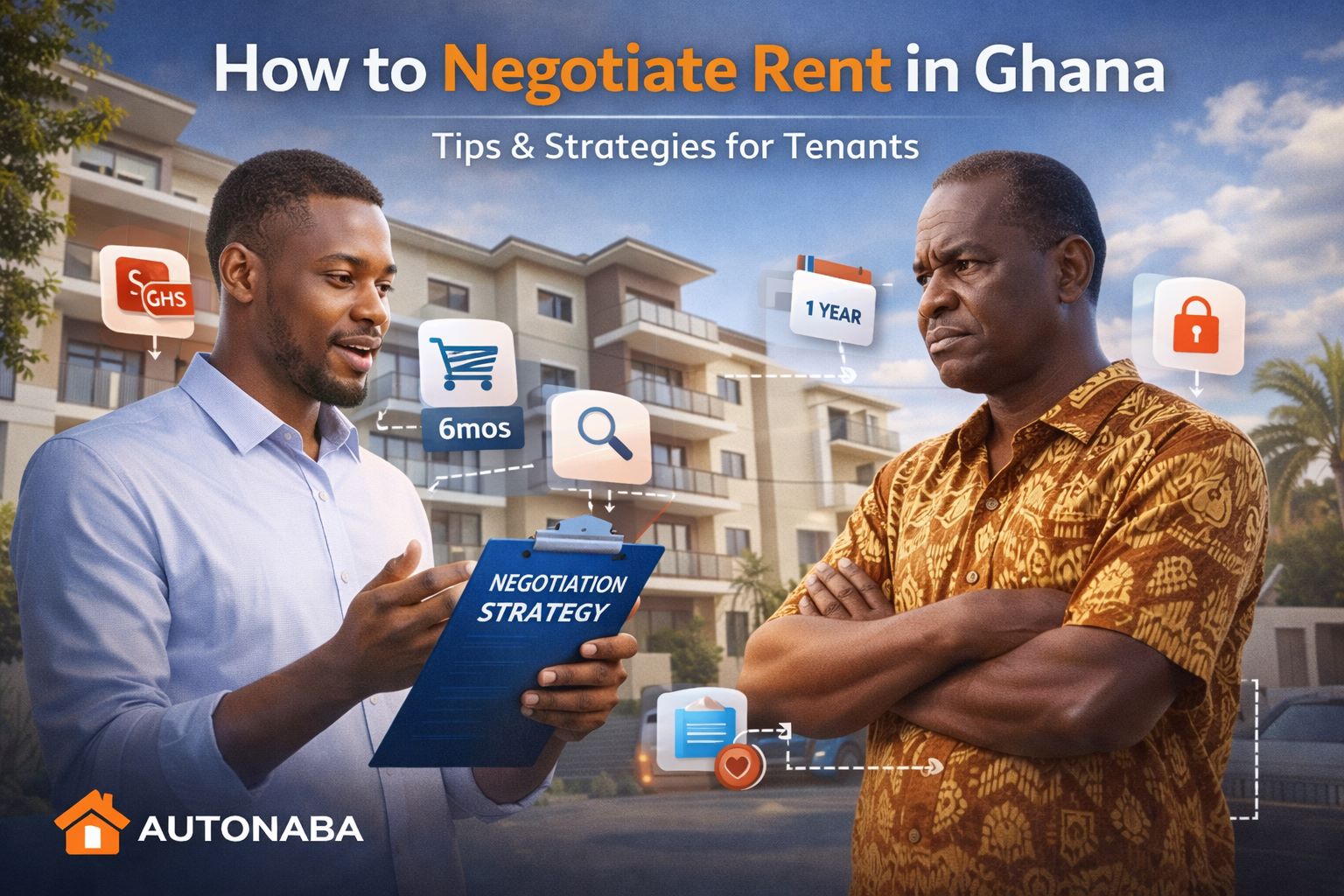
Renting a property in Ghana can be expensive, especially in prime areas like Accra, East Legon, Tema, and Kumasi. Many tenants assume rent prices are fixed and non-negotiable — but that’s not always true. In reality, landlords often leave room for negotiation.
If you understand the market, prepare properly, and approach the discussion strategically, you can reduce your rent, adjust payment terms, or secure better conditions.
Here’s a complete guide on how to negotiate rent in Ghana successfully.
1. Understand the Rental Market First
Before you negotiate, you must know the market value of similar properties in the same area.
For example:
- What is the average rent for a 2-bedroom apartment in Amasaman?
- Are newly built apartments charging more?
- Are landlords struggling to find tenants?
When you understand supply and demand, you gain negotiation power.
You can compare listings on platforms like autonaba.com to see real-time rental prices across different neighborhoods in Ghana. This helps you avoid overpaying and gives you evidence during negotiation.
If similar properties are cheaper, you can confidently say:
“I’ve seen similar apartments in this area going for slightly lower.”
That immediately changes the conversation.
2. Time Your Negotiation Properly
Timing matters in Ghana’s rental market.
Landlords are more flexible when:
- The property has been vacant for a long time
- It’s off-peak rental season
- They urgently need a tenant
- You’re ready to move in immediately
If a landlord has not found a tenant for 2–3 months, they are more likely to reduce the price or adjust terms.
3. Negotiate the Payment Terms (Not Just the Price)
In Ghana, landlords often demand 1–2 years’ rent advance. Instead of focusing only on reducing the total rent amount, negotiate the payment structure.
For example:
- Request 6 months instead of 1 year
- Ask to pay quarterly
- Request installment payments
Sometimes landlords refuse to reduce rent but will agree to flexible payment terms. That can ease your financial burden significantly.
4. Present Yourself as a Low-Risk Tenant
Landlords want stability and peace of mind.
To strengthen your negotiation position:
- Show proof of steady income
- Offer references from previous landlords
- Highlight your responsible lifestyle
- Mention long-term rental intentions
If a landlord sees you as reliable, they may lower the rent to secure you rather than risk getting a problematic tenant.
5. Use Property Condition as Leverage
Inspect the property carefully.
Look for:
- Plumbing issues
- Wall cracks
- Electrical problems
- Poor finishing
- Security concerns
If you notice repairs are needed, you can negotiate:
“Since I’ll need to fix some things, can we adjust the rent slightly?”
Alternatively, request that the landlord fix the issues before you pay full rent.
6. Avoid Showing Desperation
One of the biggest mistakes tenants make is appearing too eager.
If the landlord senses urgency or desperation, they are less likely to negotiate.
Instead:
- Stay calm
- Speak confidently
- Be polite but firm
- Be ready to walk away if necessary
When you show that you have options, you increase your bargaining power.
7. Use Market Comparison as Your Strongest Tool
Data wins arguments.
Search for similar properties on Autonaba.com and compare:
- Location
- Property size
- Amenities
- Security features
- Furnishing level
If you find better deals, you can say:
“I’ve seen similar apartments listed at a lower price. Can we review this?”
Landlords are more likely to negotiate when faced with evidence rather than emotion.
8. Negotiate Extras Instead of Price (If Necessary)
If the landlord refuses to reduce rent, negotiate other benefits such as:
- Free water for a few months
- Free maintenance
- Installation of air conditioners
- Security upgrades
- Internet included
- Waived agency fees
Sometimes added value is more beneficial than a small price reduction.
9. Bring Cash Advantage (If Possible)
In Ghana, liquidity matters.
If you can pay quickly or in a lump sum, you have leverage.
You can say:
“If we agree on this price, I can make payment immediately.”
Speed and certainty are attractive to landlords.
10. Be Respectful and Professional
Negotiation in Ghana is cultural and relational. Aggression rarely works.
Approach the conversation politely:
- Greet properly
- Build rapport
- Avoid insults
- Avoid comparing harshly
- Stay calm
Even if the landlord refuses, keep the relationship positive.
You may need them later.
11. Know When to Walk Away
Not every deal is worth it.
If:
- The landlord is inflexible
- The price is unrealistic
- The terms are unfair
- The property has legal issues
It’s better to walk away.
Platforms like autonaba.com give you access to multiple listings, meaning you are never stuck with one option.
Common Mistakes to Avoid
Here are mistakes many tenants make in Ghana:
- Accepting the first price without discussion
- Not inspecting the property thoroughly
- Ignoring the tenancy agreement details
- Failing to compare market prices
- Paying without proper documentation
Always request a written agreement and receipts.
Final Thoughts
Negotiating rent in Ghana is not about confrontation — it’s about preparation, data, and confidence.
With the right strategy, you can:
- Reduce rent
- Adjust advance payment terms
- Secure added benefits
- Avoid overpaying
The key is understanding the market and having alternatives.
Before agreeing to any rental deal, compare similar listings on Autonaba.com to know your options and strengthen your negotiation position.
Remember: In real estate, information is power.
If you negotiate smartly, you don’t just save money — you protect your financial future.